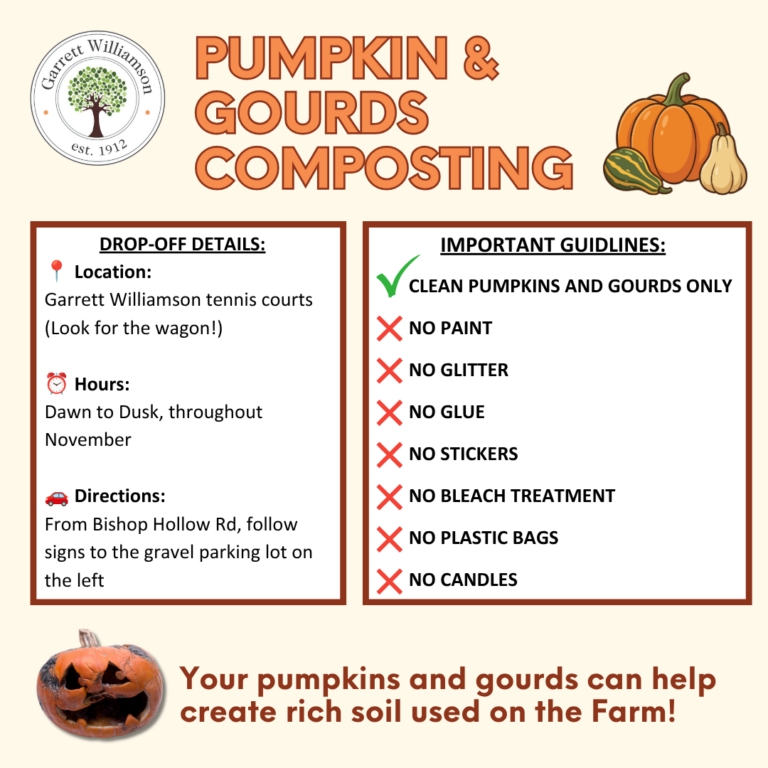
Pumpkin Composting at Garrett Williamson
Did you know your jack-o'-lantern can help nurture our farm's soil?
Garrett Williamson collects pumpkins throughout the month of November. See details below!
Why Compost? (an in depth look)
Reduce landfill waste
- Pumpkins are organic waste, and when organic waste decomposes in landfills, it releases methane, a potent greenhouse gas that contributes to climate change. In fact, methane is over 25 times more effective at trapping heat in the atmosphere than carbon dioxide over a 100-year period. By composting, you can significantly reduce this environmental impact.
- Composting organic waste like pumpkins actually allows them to decompose naturally, turning them instead into nutrient-rich soil that enrich gardens and landscapes instead of creating greenhouse gases! This process not only diverts waste from landfills but also supports healthier soil ecosystems. Compost is also excellent at preventing erosion and water run-off.
- We started collecting pumpkins from the community at Garrett Williamson in 2021. Through our collective effort, approximately 6,500 pounds of pumpkins are diverted from the landfill each year! The finished compost produced from our manure, plant waste, food waste, and these pumpkins is then applied to our growing spaces to support our agricultural education.
Nutrient recycling
- Composting is a powerful way to recycle nutrients and enrich the soil with vital elements like nitrogen, phosphorus, and potassium. These nutrients are essential for healthy plant growth, helping plants develop strong roots, vibrant foliage, and bountiful blooms or harvests.
- When pumpkins break down in a compost pile, they decompose into a rich, dark organic matter known as humus. This humus improves soil structure by enhancing its ability to retain moisture and nutrients, which is crucial for plant health, especially during dry periods. It also increases soil aeration, allowing roots to access oxygen more efficiently and promoting the growth of beneficial microorganisms that further aid in breaking down organic matter and cycling nutrients. Incorporating compost made from pumpkins into gardens or landscaping can lead to healthier plants with greater resistance to pests and diseases.
- This natural form of nutrient recycling reduces the need for chemical fertilizers, leading to more sustainable and environmentally friendly gardening practices. Overall, composting pumpkins not only helps divert waste from landfills but also contributes to a more sustainable ecosystem by improving soil quality and promoting healthy plant life.
- Beyond pumpkins—all sorts of organic material and food scraps can be composted! We do this pop-up pumpkin collection to get the conversation started. We are not able to collect food scraps for composting beyond this but please, if you are inclined, look into if your town has municipal composting; private curbside collection services; or composting in your own backyard!